Bailey’s Tailgate Talk: Stop Choking Everything (And Start Building Better Pulls)
Let’s talk about something we see all the time in the field.
Some folks would choke a sling around a mailbox if it had a recovery point.
And honestly? We get it. Choking feels quick. Feels secure. Feels like the “safe” move.
But here’s the truth: a choke is one of the highest-stress ways you can use a sling — especially synthetic.
This Tailgate Talk isn’t about saying “never choke.” It’s about understanding what a choke does to your rigging, your load, and your control — so you can stop making it the default.
Why a Choke Hits a Sling So Hard
A choke isn’t “bad.” It’s just aggressive.
The second you choke a sling, you’re stacking stress in every direction at once. Whether you mean to or not, you’re doing a few things immediately:
• Giving up capacity
• Pinching the sling body
• Tightening your bend radius
• Concentrating force into one small spot
That last one is the big issue.
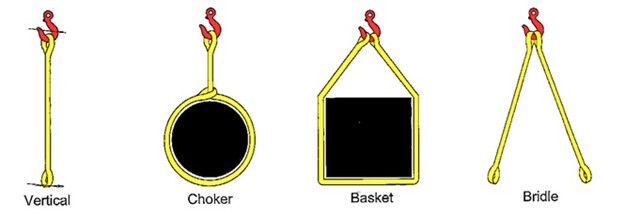
A straight pull spreads stress.
A basket spreads stress.
A bridle spreads stress.
A choke concentrates stress.
It’s the same sling — but a choke turns it into a pressure point.
Synthetic Is Strong — But It’s Not Magic
Synthetic recovery rigging is tough, but it has one major weakness: concentrated force.
When you choke a sling down tight, you can end up:
• Crushing fibers
• Creating heat
• Accelerating wear
And that’s how you end up with a sling that “looks fine”… right up until it isn’t.
A lot of failures don’t happen because the sling was junk. They happen because the sling was used in a way that turned all that strength into a single stressed-out pinch point.
The Bigger Problem: Choking Everything Makes the Pull a Fight
Here’s the part that really matters for operators:
A choke can be attached and still be wrong.
Choking everything often turns your recovery into a wrestling match. Instead of a smooth, predictable pull, you get:
• Off-center loads
• Twist and shift
• Rigging sliding into sharp edges
• The vehicle moving in ways you didn’t plan
And that’s where things get dangerous — not because the sling is “weak,” but because the recovery becomes unstable.
Real Call Scenario #1: The Ditch Pull
You’ve got a medium-duty truck slid into a ditch.
You choke a sling to one point on the front.
Now the entire pull is steering the recovery from one connection. The truck starts walking sideways. The rigging starts biting into an edge.
And suddenly you’re not recovering — you’re correcting.
That correction is where you burn time, burn equipment, and increase the chance something shifts the wrong way.
Real Call Scenario #2: The Rollover
Vehicle on its side.
You choke around a control arm because it’s “right there.”
Now your pull is trying to roll the vehicle the wrong direction — while chewing your sling up like a saw.
That’s not a stronger setup.
That’s a setup working against you.
What to Do Instead (The Professional Approach)
If you want a pull that feels smooth and predictable, you don’t get that by choking everything.
You get that by building the pull like a professional:
• Use a bridle when you can
• Spread the load
• Center the pull
• Stabilize the movement
• Use soft connections where it makes sense
• Use edge protection like you actually want your rigging to survive the job
This isn’t about being fancy — it’s about being controlled.
The Operator Benefit (Why This Matters)
This is the part that pays off on every call:
• Less fighting the load
• More control
• Less damage to your rigging
• Fewer “hold up… hold up… STOP STOP STOP” moments halfway through the pull
When you stop choking everything by default, you start building recoveries that behave the way you expect — and that’s safer for you, your truck, and the scene.
So no — we’re not saying never choke.
We’re saying stop making it the default.
Because choking is a tool.
Not a lifestyle.
If you want your synthetic slings to last longer, your pulls to feel smoother, and your recoveries to stay predictable, start building the load the way a professional does: spread it out, center it up, and protect your rigging.
Thanks for checking out Bailey’s Tailgate Talk — where cutting corners ain’t part of the job.
Bailey’s Tailgate Talk videos are posted on Bailey’s Towing Accessories, Inc. social media pages. Make sure you’re following us to stay updated!