
Bailey’s Tailgate Talk: Synthetic Rigging Don’t #2: Don’t Create a Pinch Point
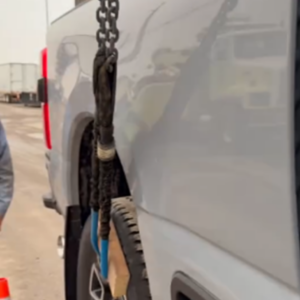
Running chain through a synthetic sling eye might seem like a simple connection—but it’s one that can quietly damage your rigging. It’s something we still see happen in the field more than it should. And it’s exactly why it’s part of our ongoing Synthetic Rigging Don’ts series from the tailgate.
At first glance, it looks like an easy connection. It works. It holds. It gets the job moving. But the issue isn’t whether it connects. The issue is what that connection creates.
The Hidden Problem: Pinch Points
When you run chain through a synthetic sling eye, you’re creating a pinch point. And pinch points are something synthetic rigging does not handle well. As tension builds, the chain begins to squeeze the sling eye between its links. Instead of the load spreading evenly across the sling, that force gets concentrated into a very small area. That’s where the problem starts.
What Happens to the Sling
Synthetic slings are designed to distribute load across fibers.
But when a pinch point is introduced:
• Pressure concentrates instead of spreading
• The chain can dig into the fibers
• Fibers begin to cut or weaken
Once those fibers are compromised, the sling is no longer performing the way it was designed to. And that’s when predictability goes out the window.
Think Beyond the Connection
With synthetic rigging, it’s not just about whether something connects—it’s about how that connection carries load. That’s the shift.
Operators need to start looking at:
• How force is distributed
• Where pressure is being applied
• Whether the connection allows the sling to function properly
Because the right connection protects the sling. The wrong one slowly destroys it.
The Operator Benefit
When you avoid pinch points and allow the sling to load correctly, you get:
• Less risk of cutting fibers
• Reduced damage to the sling
• More predictable performance under load
That means more consistency across jobs, less downtime, and more confidence in your rigging.
The Simple Rule
Don’t run chain through a sling eye. It creates a pinch point. Or like Thad says—it’s like scissors cutting through wrapping paper.
Final Thoughts
Synthetic rigging works extremely well when it’s allowed to function the way it was designed. But once pinch points are introduced, that’s when problems start. If you want your rigging to perform consistently and last longer, pay attention to how your connections carry load—not just how fast you can make them. This is just one of several common mistakes we’re breaking down in our Synthetic Rigging Don’ts series—each one focused on helping operators get more consistency, more life out of their rigging, and more confidence on every job.
For proper connections and purpose-built solutions, check out Bailey’s Synthetic Slings here.
Thanks for checking out Bailey’s Tailgate Talk — where cutting corners ain’t part of the job.
Bailey’s Tailgate Talk videos are posted on Bailey’s Towing Accessories, Inc. social media pages. Make sure you’re following us to stay updated!
Watch this episode of Bailey’s Tailgate Talk: Synthetic Rigging Don’t #2: Don’t Create a Pinch Point.