
Bailey’s Tailgate Talk: Through the Wheel? Understand the Contact First.
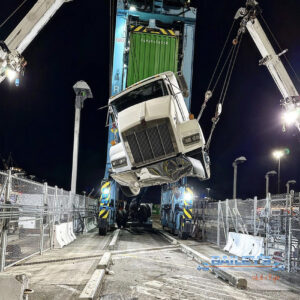
Through-the-wheel rigging can look like the easiest way to make a connection during a towing or recovery job. But the important question isn’t simply whether the rigging will fit through the wheel. It’s what that rigging will be touching once the load comes on.
A wheel may provide a convenient connection point, but it can also introduce edges, lips, and tight radiuses. Those contact conditions matter because your rigging responds to what it touches and how it’s loaded, not the type of recovery you’re performing.
Why Contact Points Matter in Through-The-Wheel Rigging
When operators talk about going through a wheel, the conversation can quickly become a comparison between synthetic rigging and chain. That misses the larger point. Different types of rigging interact with the contact point differently, so the better question is: what is happening where the rigging meets the wheel?
Synthetic rigging does not like edges or tight bends. Chain handles those conditions differently, but when it is run through a wheel, the load may still be carried across only a few links. Neither observation automatically makes one option “better.” The setup has to be considered in terms of the contact it creates.
Can You Run Rigging Through a Wheel Safely?
In some situations, yes. Operators do it every day. But the fact that a connection can be made does not remove the need to understand what is happening at that connection.
Look at the surfaces involved. Consider the edges, lips, and tight radiuses the rigging may contact. Think about how the rigging will interact with those surfaces under load. If you do not understand that interaction, you are guessing – and if you are not completely confident in the setup, do not do it.

Alternative Wheel Rigging Connection Points
A wheel may provide a convenient path, but it is not the only way to approach the connection. Depending on the situation, an operator may be able to change the setup or change the contact point.
That is where a connection option such as Bones can come into the conversation. Rather than relying directly on the wheel surface as the connection, the goal is to create a more controlled connection point. The important idea is not the name of a particular piece of recovery equipment; it is recognizing that changing the connection can change how your rigging interacts with the vehicle.

Protecting Synthetic Slings During Wheel Rigging
Creating a different connection point does not mean you stop evaluating the rest of the setup. If a sling is still interacting with the wheel, that contact deserves attention too.
For example, a urethane sleeve may be used to help manage an edge where the sling and wheel interact. The broader lesson is to keep following the load path and paying attention to every place the rigging makes contact.
Understanding Wheel Rigging Under Load
Good towing and recovery rigging is about more than getting something hooked. It is about understanding what the equipment is doing and what it is contacting once the system is loaded.
Before accepting a through-the-wheel connection simply because it is convenient, look at the contact conditions. Recognize that synthetic rigging and chain respond differently. Consider whether changing the setup or creating a different contact point makes more sense. And if synthetic slings are still interacting with an edge, consider how that contact is being managed.
The takeaway is simple: do not reduce the decision to synthetic versus chain. Understand the contact first. That understanding gives you a better basis for deciding whether the setup makes sense for the recovery in front of you.
Thanks for checking out Bailey’s Tailgate Talk — where cutting corners ain’t part of the job.
Bailey’s Tailgate Talk videos are posted on Bailey’s Towing Accessories, Inc. social media pages. Make sure you’re following us to stay updated!
See the corresponding Bailey’s Tailgate Talk video Through the Wheel? Understand Contact First
