
Bailey's Towing Accessories が投稿
What Your Eyes Miss on Synthetics – Bailey’s Tailgate Talk

Bailey’s Tailgate Talk: What Your Eyes Miss on Synthetics When you inspect synthetic rope, your eyes are an important part of the process. Cuts, fuzz, discoloration, and other visible changes can get your attention. But a visual inspection is only part of the conversation. Sometimes the area that deserves a closer look does not announce itself from a distance. That is why Bailey’s encourages operators to use another simple inspection tool they already have with them: their hands. Synthetic Rope Inspection: Do More Than Look If you find an area of synthetic rope that concerns you, hand-compress and flex the rope. Doing that can help open the braid so…
Read MoreBasket Doesn’t Always Mean Double – Bailey’s Tailgate Talk

Bailey’s Tailgate Talk: Basket Doesn’t Always Mean Double Understanding basket hitch sling capacity is important when setting up rigging for towing and recovery. A basket hitch can look familiar and still be easy to misread. You see the sling wrapped in a basket, check the tag, and notice a basket rating that may be twice the vertical rating. The easy assumption is that putting the sling in a basket automatically gives you that full basket value. But it doesn’t. The angle of the sling legs matters, and as that angle changes, the available capacity changes with it. Understanding Basket Hitch Sling Capacity Ratings Many sling tags show both a…
Read MoreYou Don’t Throw Away a Wrench Just Because You Bought Another – Bailey’s Tailgate Talk
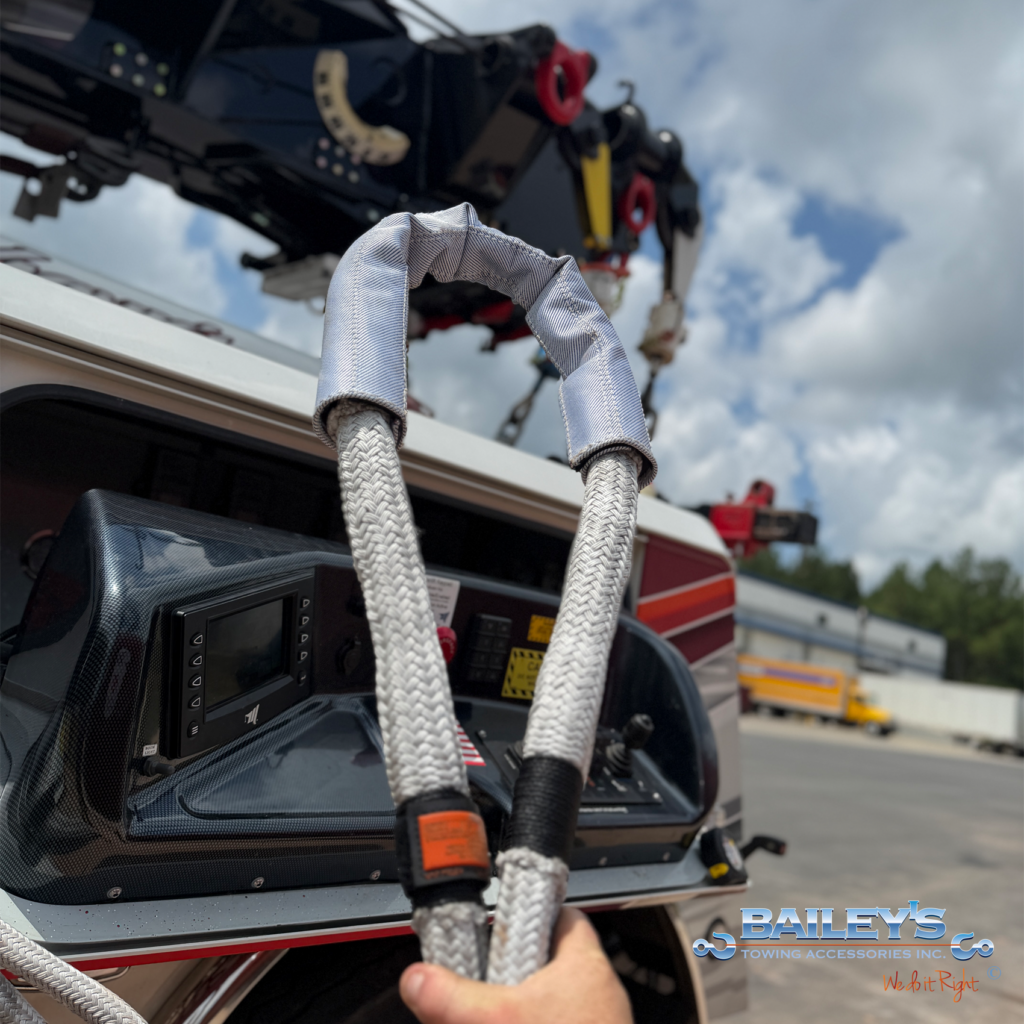
Bailey’s Tailgate Talk: You Don’t Throw Away a Wrench Just Because You Bought Another When Bailey’s introduced the B-SPEC Sling, one question kept coming up: does it replace the grommet sling? The B-SPEC Sling vs Grommet Sling conversation isn’t really about which one is better. It’s about understanding what each sling was designed to do. The B-SPEC was purpose-built for basket rigging, while Bailey’s grommet sling remains one of the most versatile synthetic rigging tools in the toolbox. Just because you’ve added a new tool doesn’t mean you throw away the one that’s been getting the job done. The better question is: which sling is right for the recovery in…
Read MoreThat Synthetic Rope Looks Good… But Is It Right for Your Winch? – Bailey’s Tailgate Talk
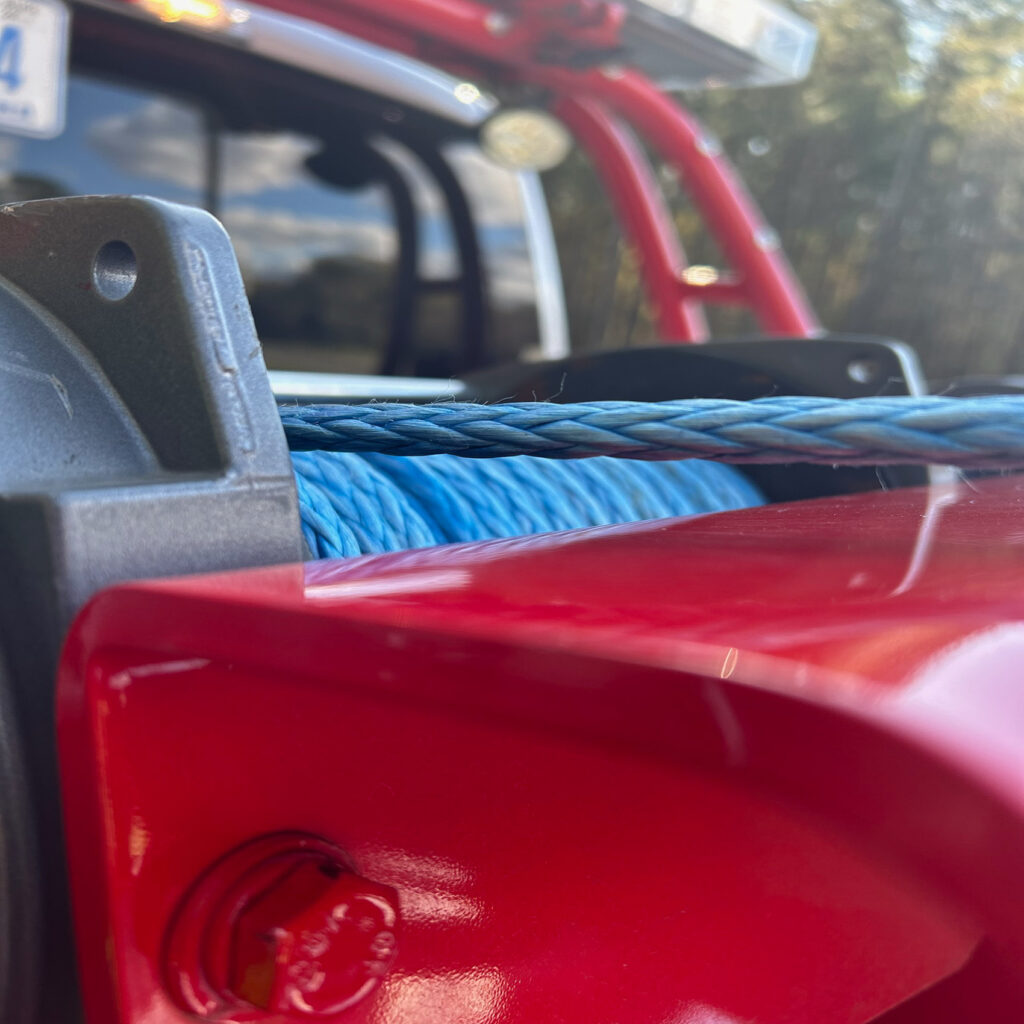
Bailey’s Tailgate Talk: That Synthetic Rope Looks Good… But Is It Right for Your Winch? When it comes to choosing synthetic winch rope for towing and recovery, color might catch your eye, but performance should make the decision. A synthetic rope can look like the perfect match for your truck and still be the wrong choice for the job. That was the lesson behind a recent call Bailey’s received about a synthetic winch line. The operator had selected the rope because its color matched the controls on the truck. After some time in service, the line was getting fuzzy, flattening out, and diving between layers on the winch drum, where…
Read MoreThe Connection Changes Everything Part 2 – Bailey’s Tailgate Talk

Bailey’s Tailgate Talk: The Connection Changes Everything Part 2 The same shackle can produce very different results depending on the rigging connected to it. That’s why understanding rigging efficiency comparison is important when choosing equipment for towing and recovery. In Part 1, we discussed working load limits and rigging connections. We explained why two assemblies with the same rating may perform differently on the same connection. Now, Part 2, takes that conversation further. This time, Bailey’s compares chain, wire rope, an HMPE eye-and-eye rope sling, and an HMPE grommet rope sling. The connection stays the same. However, the results can change depending on the material and construction. Why…
Read MoreThe Connection Changes Everything Part 1 – Bailey’s Tailgate Talk

Bailey’s Tailgate Talk: The Connection Changes Everything Part 1 If two slings have the exact same working load limit, will they perform the same on the exact same connection? Not necessarily. That question gets to the heart of why D:d matters in towing and recovery rigging. Working load limit is important, but it is not the only thing an operator should understand when looking at a rigging system. The connection itself matters, and different materials and sling constructions can respond differently even when the connection stays the same. Why Rigging Connection Points Matter D:d have been part of rigging for decades. It applies whether the rigging in front of…
Read MoreReal Recovery Slings. Real Break Test. Real Results. – Bailey’s Tailgate Talk
Bailey’s Tailgate Talk: Real Recovery Slings. Real Break Test. Real Results. What can worn recovery slings actually tell you after years of hard service? Appearance can tell you that rigging has seen work, but it cannot tell the whole story of what is happening inside the sling. That is why Bailey’s asked a longtime customer to send back several heavily used slings and put them on a test machine instead of guessing. The goal was not to prove that worn rigging should stay in service. It was to learn from real recovery equipment that had been working since 2023 and share what those destructive tests revealed. Real Recovery Slings…
Read MoreAre You Looking at Sling Strength the Wrong Way – Bailey’s Tailgate Talk
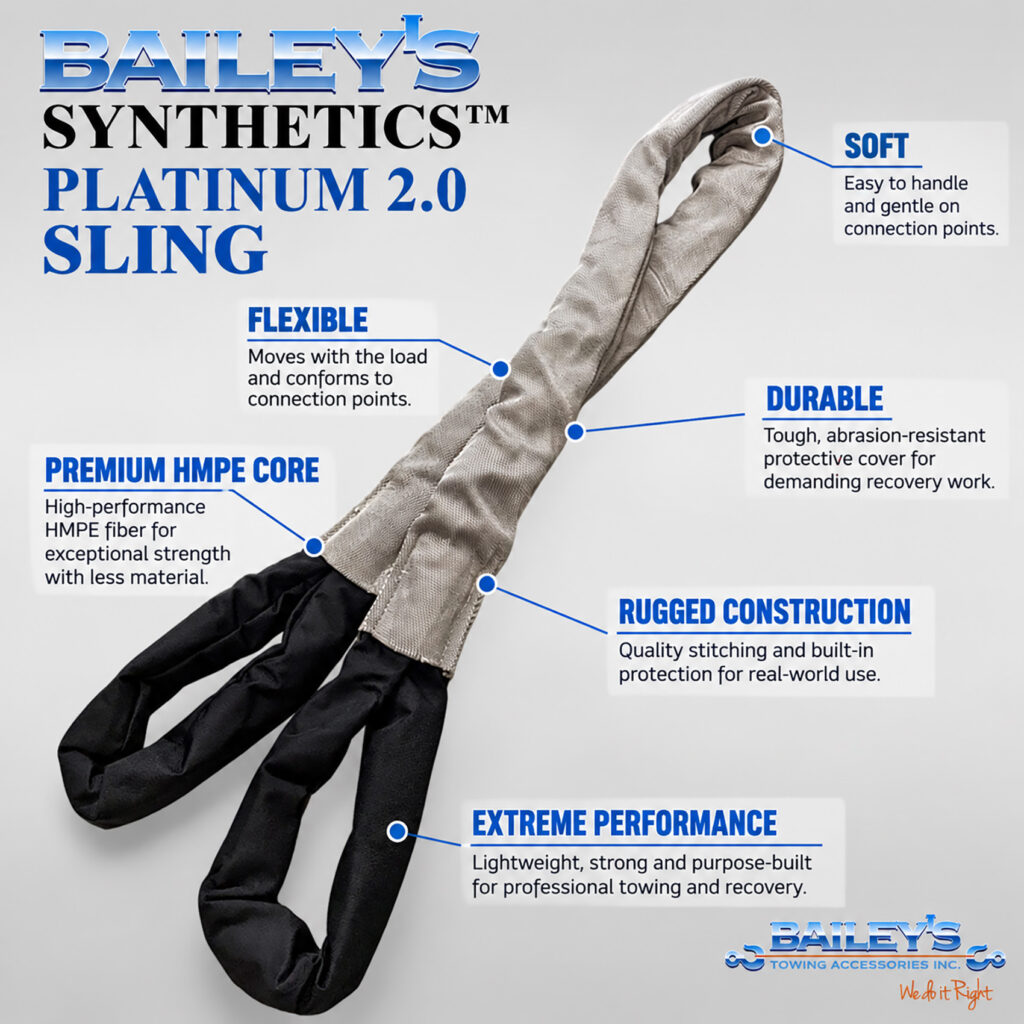
Bailey’s Tailgate Talk: Are You Looking at Sling Strength the Wrong Way Open a tow truck toolbox and it doesn’t take long to see the problem: operators are carrying more rigging, more protection, and more hardware, but storage space hasn’t grown with it. Nobody wants to leave behind the one piece of recovery equipment they’ll need on the next call. That’s where HMPE recovery slings are changing how operators think about sling strength. Traditional polyester round slings typically get larger as capacity increases, but high-performance HMPE fibers can provide comparable working load limits in a smaller, lighter package. So, does a bigger sling always mean a stronger sling? Not necessarily.…
Read MoreThrough the Wheel? Understand the Contact First. – Bailey’s Tailgate Talk

Bailey’s Tailgate Talk: Through the Wheel? Understand the Contact First. Through-the-wheel rigging can look like the easiest way to make a connection during a towing or recovery job. But the important question isn’t simply whether the rigging will fit through the wheel. It’s what that rigging will be touching once the load comes on. A wheel may provide a convenient connection point, but it can also introduce edges, lips, and tight radiuses. Those contact conditions matter because your rigging responds to what it touches and how it’s loaded, not the type of recovery you’re performing. Why Contact Points Matter in Through-The-Wheel Rigging When operators talk about going through a…
Read MoreThink all slings lose strength the same way? They don’t. -Bailey’s Tailgate Talk

Bailey’s Tailgate Talk: Think All Slings Lose Strength the Same Way? They Don’t. When a recovery sling fails below its rated capacity, it’s easy to assume something went wrong with the sling itself. But the real issue may be how it’s being used. Understanding the D:d ratio for recovery slings is an important part of proper rigging. The size of your connection point compared to the thickness of your sling can significantly affect sling efficiency and performance. What Does D:d Mean? The D:d ratio compares the size of what the sling is bending around with the thickness of the sling. The big D represents the diameter or size of the…
Read More